Queer Places:
University of Oxford, Oxford, Oxfordshire OX1 3PA
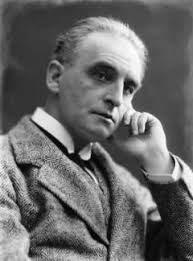 Frederic Herbert Trench (November 12, 1865 – June 11, 1923) was born on November 12, 1865, in Avonmore, County Cork, Ireland, the son of William Wallace
Trench and Elizabeth French Allin. He received his early education at Haileybury and later attended Keble College, Oxford, where he graduated with a Master
of Arts (M.A.), and was subsequently elected a fellow of All Souls College, Oxford, in 1889. On July 15, 1891, he married Lilian Isabel Fox, daughter of
Robert Fox, and together they had five children: Waldo Trench Fox (born 1892), Desmond Patrick Trench (born 1893), Romola Trench (born 1895), Avice Blanaid
Trench (born 1898), and Maeve Trench (born 1899). From 1891, he worked as a Senior Examiner for the British Board of Education, a position he maintained
until 1908, during which time he traveled extensively.
Frederic Herbert Trench (November 12, 1865 – June 11, 1923) was born on November 12, 1865, in Avonmore, County Cork, Ireland, the son of William Wallace
Trench and Elizabeth French Allin. He received his early education at Haileybury and later attended Keble College, Oxford, where he graduated with a Master
of Arts (M.A.), and was subsequently elected a fellow of All Souls College, Oxford, in 1889. On July 15, 1891, he married Lilian Isabel Fox, daughter of
Robert Fox, and together they had five children: Waldo Trench Fox (born 1892), Desmond Patrick Trench (born 1893), Romola Trench (born 1895), Avice Blanaid
Trench (born 1898), and Maeve Trench (born 1899). From 1891, he worked as a Senior Examiner for the British Board of Education, a position he maintained
until 1908, during which time he traveled extensively.
Steeped in literary pursuits, Trench published his first major collection of poetry, Deirdre Wedded (originally titled Deirdre Wed and Other Poems), in
1901, drawing inspiration from ancient Irish legend, followed by New Poems (1907) and Lyrics and Narrative Poems (1911). His narrative poem Apollo and the
Seaman was famously set to music as a Dramatic Symphony, Op. 51, by composer Joseph Holbrooke and performed under the baton of Thomas Beecham in 1908. In
addition to Holbrooke, some of his other poems were set to music by composers Arnold Bax and Mildred Lund Tyson. Moving into theatrical work for a few
years, Trench collaborated closely with his friend Thomas Evelyn Scott-Ellis, 8th Baron Howard de Walden, serving as the artistic director of London's
Theatre Royal, Haymarket. There, they championed ambitious productions such as Maeterlinck's The Blue Bird in 1909 and Ibsen's The Pretenders in 1913.
Afterward, he spent time traveling.
During the First World War, Trench worked in Florence, Italy, fostering better cultural and political understanding and helping found the British
Institute in Florence in 1917, serving as its honorary vice-chairman. His later works included poetic dramas like Napoleon (1918), which was staged in
London by the Stage Society. Following an accident in 1919 from which he never fully recovered, his active writing career largely drew to a close. Trench
died suddenly on June 11, 1923, at the age of 57 in a hospital in Boulogne-sur-Mer, France.
Herbert Trench is historically connected to the prominent Anglo-Irish author and essayist Vernon Lee (the pen
name of Violet Paget), a central figure of the late-Victorian aesthetic movement who lived openly in Italy and is recognized today as a significant icon in
queer history and literature. Trench's connection to Lee crosses paths through the vibrant expatriate and intellectual networks inhabiting the Florentine
hills. Most notably, in 1920, Trench served as a vital cultural bridge when he sent the young Italian scholar and critic
Mario Praz up the slopes to Maiano to visit Vernon Lee at her residence, Il Palmerino. This introduction launched a
lifelong intellectual correspondence and friendship between Praz and Lee, cementing Trench's peripheral yet active role within Lee's sophisticated,
queer-friendly circle of European artists, writers, and freethinkers.
References:
- Biographical & Genealogical Reference: Burke's Landed Gentry of Ireland and official university registers, including Joseph Foster's Alumni Oxonienses: the Members of the University of Oxford, 1815–1886 (Parker and Co., 1888–1892), which document his academic credentials at Keble College and his fellowship at All Souls College.
- Contemporary Biographical Entries: Entries in the Encyclopædia Britannica (12th Edition, 1922) and John William Cousin's A Short Biographical Dictionary of English Literature (J.M. Dent & Sons, 1910).
- Literary Anthologies: Justin McCarthy's Irish Literature (University of America, 1904) and John Cooke's The Dublin Book of Irish Verse 1728–1909 (Hodges, Figgis, 1909).
- Deirdre Wed and Other Poems (London: Methuen, 1901)
- New Poems (London: Methuen, 1907), containing Apollo and the Seaman
- Lyrics and Narrative Poems (London & New York: Hodder & Stoughton, 1911)
- Ode from Italy in Time of War: Night on Mottarone (London: Methuen, 1915)
- Napoleon: A Play (Oxford University Press, 1919)
- The Collected Works of Herbert Trench, edited by Sir Harold Williams (3 volumes, London: Jonathan Cape, 1924)
- Critical & Archival Studies: Abel Chevalley's bilingual monograph Herbert Trench, poète anglais (1865–1923) (Paris: Les Presses Universitaires de France, 1925), as well as research databases and bibliographic repositories such as Ricorso (The Resource Guide to Anglo-Irish Literature) and The LiederNet Archive for musical settings of his poetry by composers such as Joseph Holbrooke and Arnold Bax.
Support this project
This website is a passion project researched, developed, and funded entirely by me. If you find the content valuable and would like to help support the ongoing research and hosting costs, any contribution is deeply appreciated.
Thank you for keeping this independent resource alive!
My books on Amazon: Elisa Rolle's books
BACK TO HOME PAGE